28.1.08

No end to tit-for-tat

And how do you teach a lesson to your kids in terms of integrity, thoughtful trust and responsibility? The EU top justice official has announced the coming of a European version of the biometrics control epidemic at country gates. 19 pieces of sensitive passenger data kept for 13 years. Plan to invest in the storage device equities. The new scheme is advocated seemingly as a tit for tat retaliation to the US who started the game, but against the terror of terrorism which remains threat No.1. What's # 2 then?

Big children at the playground are raising the stakes and surveillance cameras are selling like hot cakes. 10 fingers now printing, more coming soon elsewhere, the Internet cluttered with more biometrics and additional tracing back data than spam mails. Of course, as the steam has vanished on this blog - cool Japan is easier to sustain - and now that Europe is stepping in, what is left but adopting "shikata ga nai" as the new trendy expression in the West, to replace the stale zen?

I for one is and will ever be worried about what to tell my son about life where chatting about the next game terminal should not be all that counts. Being against and stating it is the ultimate wall of not paying in, even when getting the passport, fingers, iris and what else scanned at the gate.

Read more about Europe original stand here to start with.

24.1.08

Professor Susumu Kudo on biometrics filing

An exclusive interview of Professor Susumu Kudo of Meiji-Gakuin University in Tokyo.

14.1.08

Hokkaido Shimbun editorial on security and missed target

The Hokkaido Shimbun editorial of January 4th ponders about the acute rash of security concern, and that Japan may have other paths to tread on. Despite the wishy-washy conclusion, doubting is the start of something creative.

Original link.

サミットの年に考える テロ根絶、とるべき道は(1月4日)

 「テロ対策特別警戒中」

 いつからか、そんな看板が日本中に立つようになった。北海道ののどかな農村や漁村でも目に入る。

 ニューヨークの二つの超高層ビルが崩壊した二○○一年九月十一日以降、米国はひたすら「テロとの戦い」に突き進んだ。

 前線ではないにしても、日本もその戦列に加わってきた。日本が戦後、守り通してきた憲法の平和主義が曲がり角に立たされる。そんな局面でもあったように思う。

 「テロ警戒」の看板を見たからといって、人々がテロの脅威を肌身に感じるわけではないだろう。

 だが、遠い出来事であったはずのテロが、暮らしのなかに静かに影を落としている風景には違いない。

 テロとの戦いは、社会にある種の息苦しさをもたらした。

 戦いを続けている以上、それは我慢しなければならないことなのだろうか。一方で、もっと大事なものが損なわれてはいないだろうか。

 そうした問いを重ねてたどり着くのは、そもそもいまの戦いは正しいのだろうか、という疑問だ。

*社会が一色に染まる怖さ

 かつては中東やヨーロッパなどの一部の国のことと思われていたテロの恐怖を世界規模に広げたのが「9・11」事件だった。

 米国の繁栄の象徴が狙われ、その映像がテレビで世界中に流れた。

 その後、スペインや英国の大都市などでも大規模テロが相次いだ。米国と有志国の報復攻撃が新たなテロを招く。そんな連鎖が続いた。

 日本にテロの予告が突きつけられたこともある。米国支持の姿勢が脅威を呼び寄せてしまったのだ。

 いつ、どこで巻き込まれるか分からない。テロリストがどこに潜んでいるかも分からない。それがテロの怖さだろう。

 だが、人々の周りに漂う息苦しさとは、必ずしもテロへの恐怖によるものではない。

 陸上自衛隊が初めてイラクに派遣された四年前の冬を思い出す。

 当時、派遣第一陣の司令部があった旭川の街の至るところに、黄色いハンカチがひるがえった。隊員たちの無事な帰還を願う、善意の市民運動だった。

 その圧倒的な善意の前に、派遣反対の声はかき消されがちだった。戦後日本の重大な岐路ともいえる場面で、社会が一色に染まる怖さを感じとった人は少なくない。

*生命と自由を踏みにじる

 同じころ、自衛隊が派遣に反対する市民の活動をひそかに監視していたことも明らかになった。

 来日外国人には指紋採取と顔写真提供が義務づけられた。テロリストの入国阻止が目的だという。

 街頭では監視カメラが市民の行動に目を光らせている。

 多数の声に懐疑を許さないような空気。善良な市民にまで向けられる疑心。こうしたことの一つ一つが、テロとの戦いを声高にいう社会を薄い皮膜のように覆いつつある。

 京都大学大学院の大澤真幸(まさち)教授の指摘は的確だ。

 「民主主義と自由を守るためのセキュリティーの強化が、民主主義と自由を食いつぶしてしまう」

 同じことはこれまでの米国の振る舞いにもいえる。

 米国は国際社会の反対の声を振り切って、イラク戦争を始めた。

 その手続き自体が、非民主的だっただけではない。米国がイラクやアフガニスタンで仕掛けた攻撃は、市民を巻き添えにして、その生命と自由を蹂躙(じゅうりん)してきた。

 テロは自由も民主主義も否定し、生命の尊厳を踏みにじる卑劣な犯罪行為だ。犯罪を裁くのは武力ではなくて法でなければならない。

 テロリストを追いつめるのに必要なのは警察力だ。

*貧困対策こそ日本の仕事

 今年七月、洞爺湖畔で主要国首脳会議(サミット)が開かれる。

 地元周辺はもちろんのこと、札幌や東京でも厳しい警備体制が敷かれるに違いない。

 そのとき日本人は、テロの脅威を身に降りかかる問題として考えることになるのだろうか。

 だが、想像力をそこにとどめていてはいけない。

 息苦しさに慣れてしまい、いつの間にかそれが当たり前になっている社会。テロリストを掃討するためだといって、他国の軍隊に街ごと破壊され、生命まで奪われる市民。

 自分の周りで起きていることに鈍感なままでいて、遠い国の生命の尊厳を思うことができるだろうか。

 ここでいま一度考えてみたい。テロリストとはだれか。どこに潜んでいるのか。

 テロリストは米国が追い続けるウサマ・ビンラディン容疑者とその一味だけではない。テロリストは憎悪と貧困の中から生まれ続ける。

 先進資本主義国の日本は国際社会の勝ち組といっていい。途上国の労働力や資源の上に成り立っている消費大国でもある。

 貧しく飢えた人々を救う責任を、日本はもっと自覚する必要がある。そのための知恵と力も持っている。

 長い時間と手間がかかる道になるだろう。そしてそれは武力に頼る戦いでは、決してなし得ない仕事だ。だからこそ進むべき道でもある。

12.1.08

Lame as expected

No news, or at best, lame news. Biometric filtering does not affect tourism. Rights groups and business leaders have had worlds apart concerns about the consequences of the overzealous move of the Japanese administration but they come bundled in this short article. Rights groups have been concerned with the meaning of it. Meaning does not mean anything to the others, unless it affects ROI. Fingerprinting is economically speaking a harmless practice. Any other point of view is irrelevant. Nothing new.


Fingerprinting Harmless To Tourism In Japan: Government -AFP

TOKYO (AFP)--Japan's new practice of fingerprinting and photographing foreigners hasn't discouraged tourism, with last year seeing a record number of visitors, a government survey said Friday.

Japan started the new security measures at airports and other points of entry despite concerns by rights groups and business leaders.

Japan modeled the tighter immigration controls on the controversial U.S.-Visit system launched in the U.S. after the Sept. 11, 2001 attacks, which keeps biometric data of foreign visitors.

However, the number of foreigners entering Japan between Nov. 20, the day the new controls were introduced, and Dec. 31, rose 13.4% from the same period of 2006 to 980,000, the justice ministry said.

The total number of foreigners who visited Japan last year hit a record 9.15 million, up 12.9% from the previous year, the ministry said in a preliminary survey.

"One factor is thought to be the effects of government policies to promote tourism in Japan," it said, noting a particular growth in visitors from other Asian countries.

Japan has been promoting a "Visit Japan" campaign to double the annual total of visitors to 10 million by 2010 from 5.21 million in 2003.

The campaign includes advertisements overseas and more foreign-language assistance in Japan.

A separate survey by Japan's largest travel agency said last month that a record nine million foreigners are expected to visit Japan next year, drawn both by the country's culture and the upcoming Group of Eight summit.

Tourism to Japan has also been boosted by the recent weakness of the yen, particularly in comparison with the soaring South Korean won and euro.

10.1.08

Ca ne fait pas mal et c'est rapide

Les empreintes et la photo des étrangers entrant au Japon, cela ne fait pas mal et c'est rapide. Le Japon est vraiment un pays qui essaye de faire bien les choses, de prévoir tout ce qu'il faut pour l'imprévu. Les empreintes au Japon, c'est dans tous les aéroports et ports du Japon, tous ces lieux en lien avec l'extérieur. L'extérieur si étranger et différent, possiblement porteur de terrorisme. C'est bien connu, au Japon, le terrorisme n'existe pas, sauf quand ça arrive dans le métro ou dans des avions.

Après une descente de l'avion, bienvenue en zone batarde, pas encore au Japon. Vous serez guidé jusque là où il faut passer. Vous avez l'habitude de voir quelques flics bavarder dans un bocal à Charles de Gaulle, évoquant la dernière Star Academy ? Au Japon, c'est bien différent. Après le dépistage à la caméra infrarouge pour répérer tous les touristes qui rapporteraient un sale virus, vous passer devant un gars qui a obtenu un nouveau boulot, grâce à la nouvelle loi sur l'entrée des étrangers au Japon.
Son boulot, c'est de faire le tri entre les Japonais et les autres. Simple, ça se voit sur la figure.
Ceux qui veulent savoir s'ils peuvent passer avec leur famille japonaise dans la même file d'attente, c'est niet, non, だめ.
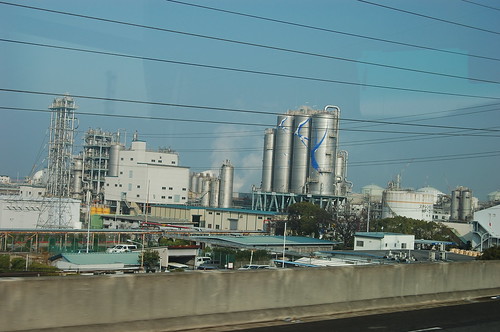
Retour en bus depuis l'aéroport du Kansai

Ensuite, un autre type qui a un nouveau boulot, plus compliqué. Il doit trier le simple touriste étranger et les possesseurs de re-entry permit, le petit papier qui permet de revenir au Japon, quand on y habite, y travaille et tout le reste.
Ouf, on est pas avec les simples touristes qui se mettent dans la file d'attente à la sauce disneyland (longue).

Ensuite, il y a un gars qui a un nouveau boulot, c'est de montrer de la main où aller. Car il y a le choix: au moins 4 officiers de l'immigration sont postés derrière leur bureau, à la hauteur d'un juge de tribunal, plus haut que vous, à moins que vous soyez Hollandais, donc plus grand que ces petits troublions assis sur leur chaise.

Devant vous, la sublime machine est là. Deux emplacements pour les index, un écran capable d'afficher 2 millions de couleurs et le message «Welcome» et au-dessus, une petite caméra. Pas très dépaysé, cela ressemble à un MacBook, le clavier en moins, les pose-doigts en plus et le tout, en plus petit. Cela va très vite, sauf si on y met de la mauvais volonté. Ensuite, pour la photo, on ne sait pas, mais j'aimerai bien voir ma tête... Pas de questions en plus de la part du type sur sa chaise haute. Les questions, c'est moi qui les ai posées à l'officier, qui n'y peut rien. Je ne suis peut-être pas le seul à dire clairement que c'est de la connerie ce truc, j'espère. Il pensera s'il veut qu'un Français est mal poli.

Alors si vous rêvez de parler mal à un officier de l'immigration, n'essayez pas Paris CDG, mais plutôt le Japon, vous éviterez certainement une fouille au corps. Au Japon, tout est bien fait pour éviter le conflit, souvenez-vous en ! Le Japon, c'est moche à l'immigration (et un peu entre l'aéroport et Osaka, photos ci-dessus), heureusement, il reste Kyoto et tant d'autres endroits une fois la frontière passée. Mais SVP, quand vous donnez votre passeport, donnez le tract ou dîtes combien vous n'appréciez pas ces mesures. Vous ne risquez rien. (et vous pouvez même mettre un tract dans les boîtes à suggestions !)
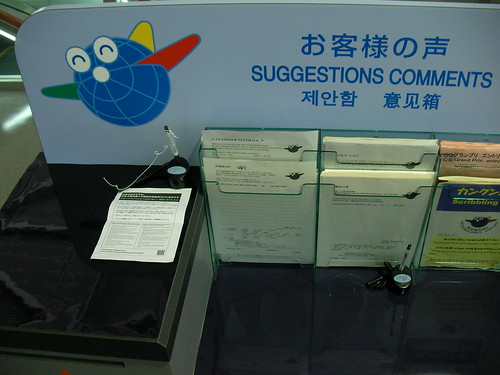

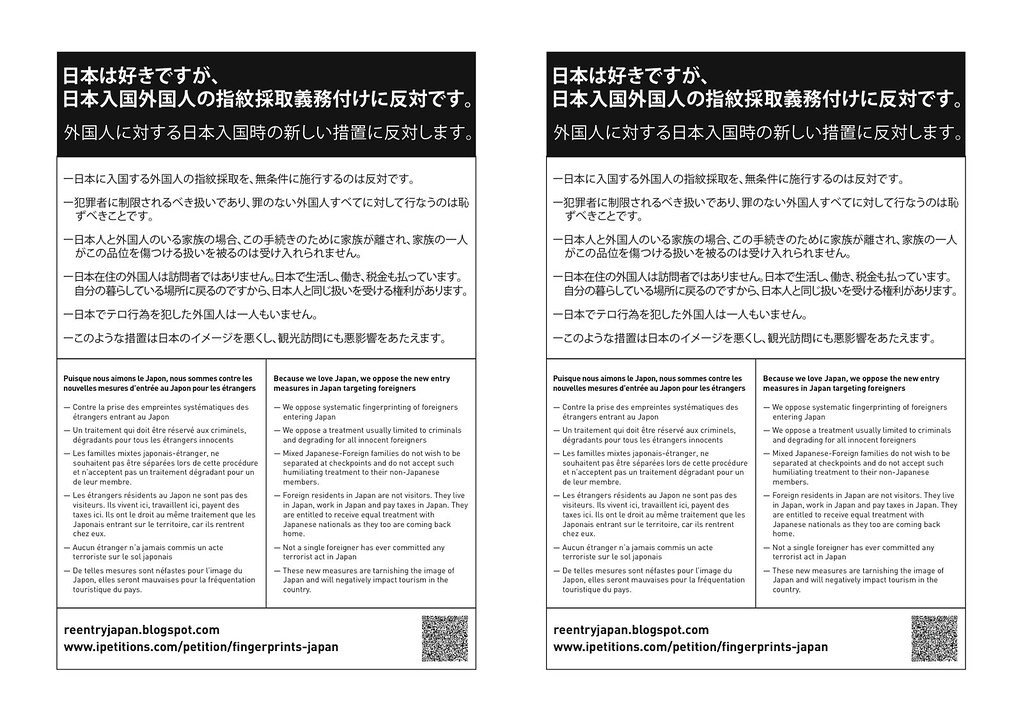
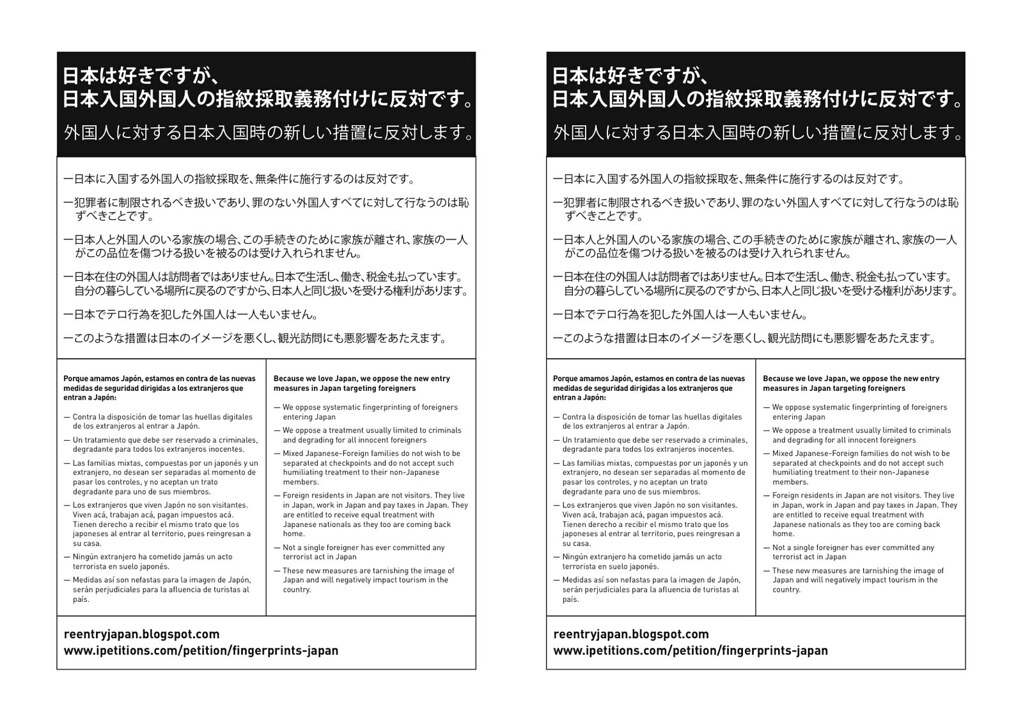
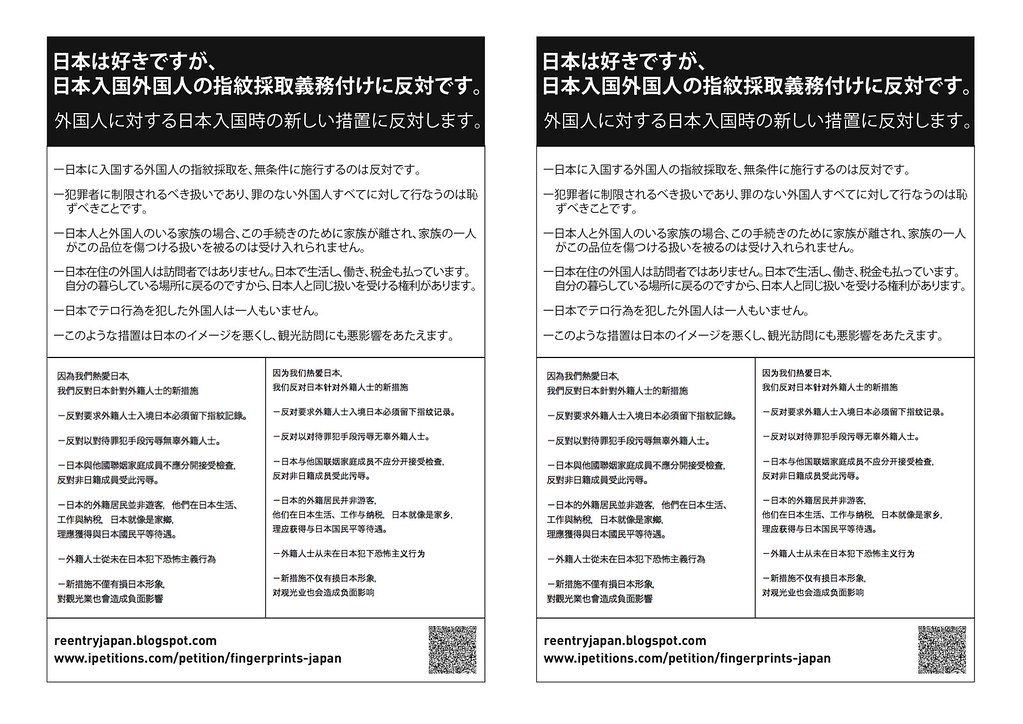
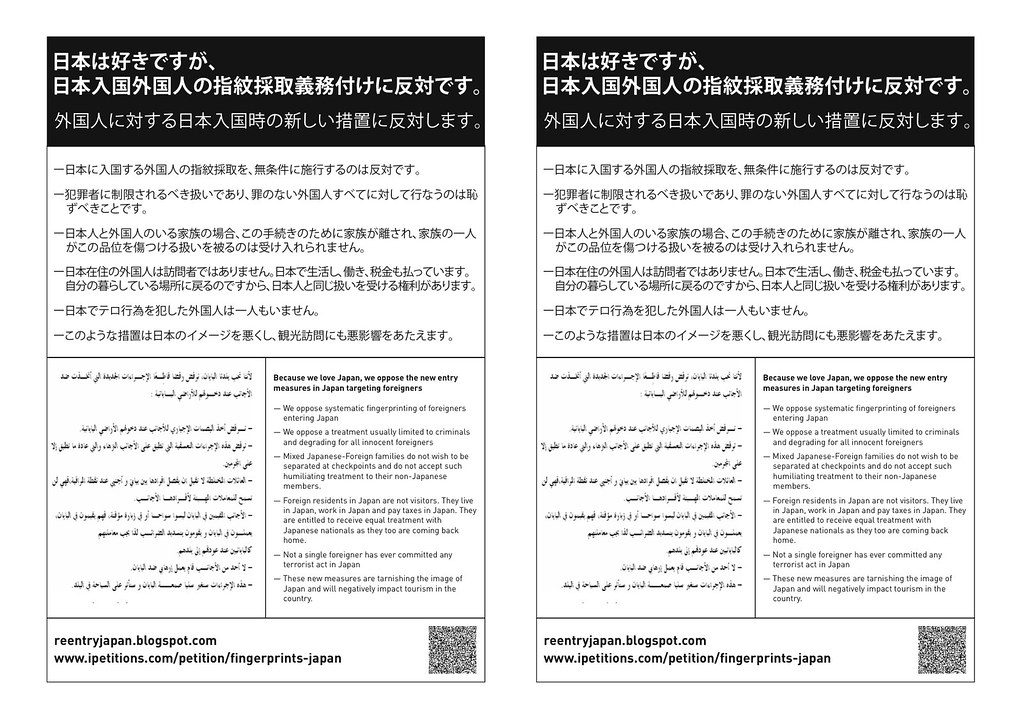
Suggestions pour l'abolition de la prise des empreintes à l'entrée du Japon !

8.1.08

Rosa Parks and Kathleen Morikawa

Rosa Parks was tired and sat on an Alabama bus in 1956. When she was requested to move to the back of the bus to allow a white person to sit at her place. She said no. On this picture, arrested Rosa Parks is fingerprinted. The rest is history.

Kathleen Morikawa said no more to fingerprinting. The rest is covered in this article she authored in the Japan Times. I hope we at Re-entry Japan would have had the honor to carry a special contribution from her. But Re-entry Japan is no Japan Times and celebs do not make their email ID public. Does she have a PR agent?

Anyway, Re-entry Japan is seriously calling Kathleen Morikawa to contribute an entry her, humorous or dead serious, as she prefers.

7.1.08

Tepid and stupid article in The Japan Times

The Japan Times as other paper media is carrying from time to time such dull and utterly stupid "by invitation" articles written by some ex-diplomatic individual for the sake of ... well, I am lost at finding out for what sake and purpose besides pleasing some other important people.

The diplomatic moron is some
Hugh Cortazzi, a former British career diplomat, who served as ambassador to Japan from 1980 to 1984.

The
article untitled "Gut reaction to immigration" should read "Bland opinion to immigration".

The last part is heroic in that it just skips discussion by simply stating that calling racial fingerprinting targeting foreigners "is an exaggeration", period, after suggesting, and who would think the contrary, that immigration in many countries is not a smooth process. Some arguments please. Oh! but yes, you were a diplomat all your life. Some more petits fours then.

"The approach by Japan, faced with an aging and declining population, seems to be that it would rather acquiesce to inevitable economic decline rather than accept significantly higher rates of immigration. Some foreign observers see the latest signs of Japanese official discrimination against foreigners, as shown by the compulsory fingerprinting of all foreign visitors, as a recrudescence of Japanese chauvinism and isolationism.
This is an exaggeration, but it has been noted that if these measures were intended as a response to the threat of terrorism, they are odd in that all terrorist actions in Japan so far have been committed by indigenous groups who would be unaffected by these measures. Perhaps the Japanese government just wants to show solidarity with the Americans."

2.1.08

Endemic French blindness?

An article in French over the blogdudemocrate.org is wrapping up various issues around the biometrics filtering targeting only foreigners. If you read French, the first comment to that blog entry is a must read, symptomatic of the acute, epidemic apoliticism (a form of cool "positive" blindness) endemic among at least some young French male who flew away from France during the past 10 years to find a wife here, peace of mind in the absence of meaningful conversation and call it civilization. As already featured in some French forum on Japan, the support of local French residents and Japan French hardcore fans all seemingly born in the 80s is strong. Here is a meaningful subject of research probing the historical context that brought a European lost generation seeking refuge and void of the mind in Japan.